 EN
EN

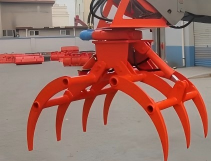
360° grab fork
The 360° Grab Fork is a versatile and heavy-duty hydraulic grapple designed for efficient material handling across multiple industries. It delivers powerful gripping performance and 360° rotation, enabling precise control when handling irregular or heavy materials. Widely used in waste management, construction, mining, forestry, ports, and demolition, it ensures safe, stable, and efficient operations. With robust safety mechanisms, wide equipment compatibility, and easy maintenance, the 360° Grab Fork enhances productivity, reduces manual labor, and maximizes equipment utilization in demanding industrial environments.
Description
Product Description
The 360° Grab Fork is a versatile and heavy-duty hydraulic grapple designed for efficient material handling across multiple industries. It delivers powerful gripping performance and 360° rotation, enabling precise control when handling irregular or heavy materials. Widely used in waste management, construction, mining, forestry, ports, and demolition, it ensures safe, stable, and efficient operations. With robust safety mechanisms, wide equipment compatibility, and easy maintenance, the 360° Grab Fork enhances productivity, reduces manual labor, and maximizes equipment utilization in demanding industrial environments.
Application Fields
1. Waste Management and Recycling Industry
In waste management facilities and recycling centers, hydraulic grapples are indispensable. They efficiently handle mixed waste, recyclable materials such as metal scraps, plastic bottles, and cardboard. At landfills, they compact waste and move large debris, ensuring optimal use of space. The grapple’s ability to securely grip irregularly shaped items makes it ideal for sorting operations, reducing manual labor and increasing processing speed. For instance, in a recycling plant, it can swiftly separate metal scraps from plastic waste, a task that would otherwise be time-consuming and labor-intensive.
2. Construction Sector
During construction projects, hydraulic grapples play multiple roles. They are used to clear construction sites by removing debris, broken concrete, and wood scraps. When transporting building materials like pipes, steel beams, and timber, the grapple’s strong grip prevents items from slipping, enhancing on-site safety. In demolition work, they efficiently grab and haul away rubble, contributing to the swift progression of demolition projects. In urban construction, where space is limited, their ability to maneuver in tight areas makes them invaluable for clearing out old structures and preparing sites for new builds.
3. Mining and Quarrying Operations
In mining sites, hydraulic grapples are employed to extract and transport ore, coal, and other minerals. Their robust construction allows them to withstand the abrasive nature of rocks and soil. In quarries, they move large stones and gravel, assisting in the production of construction aggregates. The grapple’s powerful clamping force ensures that even heavy loads are handled with stability, minimizing the risk of material spillage. In open-pit mines, they can efficiently load trucks with mined materials, streamlining the extraction process.
4. Forestry and Logging
Within the forestry industry, hydraulic grapples are vital for handling logs, branches, and stumps. They can easily grasp and lift heavy timber, facilitating loading onto trucks for transportation to sawmills. During land clearing operations, they remove underbrush and tree debris, preparing land for new plantations or development. The grapple’s tines are designed to avoid damaging the wood, preserving the quality of the timber. In sustainable forestry practices, this feature ensures that logs are handled with care, reducing waste and maximizing the value of harvested wood.
5. Ports and Logistics
At ports and freight yards, hydraulic grapples are used to load and unload bulk materials like coal, grain, and iron ore from ships and trucks. Their large capacity and secure grip enable efficient transfer of these materials, reducing downtime for vessels and vehicles. They also handle containers and oversized cargo, ensuring smooth logistics operations in busy port environments. For example, in a coal port, a hydraulic grapple can quickly transfer tons of coal from a ship’s hold to a storage yard, keeping the supply chain moving efficiently.
6. Demolition and Deconstruction
In demolition projects, hydraulic grapples are instrumental in dismantling structures and removing the resulting debris. They can pull down walls, grab steel beams, and clear concrete fragments. Their precision in handling allows for selective demolition, where specific parts of a structure are removed without damaging the surrounding area, a crucial feature in urban deconstruction projects. In heritage site renovations, this precision ensures that historical elements are preserved while outdated structures are safely removed.
7. Wide Equipment Compatibility
Hydraulic grapples are designed to be compatible with a range of host machines, including excavators, skid steer loaders, and material handlers. They feature standardized mounting interfaces, allowing for quick and easy attachment and detachment. This compatibility enables businesses to use the same grapple across different machines, maximizing equipment utilization and reducing investment costs. A construction company, for example, can use the same grapple on an excavator for site clearing and on a skid steer loader for transporting materials, eliminating the need to purchase multiple specialized attachments.
6. Robust Safety Mechanisms
Safety is a key feature, with built-in locking systems that secure the tines in place once materials are grabbed. This prevents accidental release during lifting or transportation, protecting both workers and equipment. The grapple’s stable grip also reduces the risk of material spillage, which is crucial in environments like ports or construction sites where debris can pose hazards. When lifting heavy loads over worker areas, the locking mechanism ensures that materials remain securely held, minimizing the risk of accidents.
8. Easy Maintenance
Hydraulic grapples are designed for ease of maintenance. Critical components like hydraulic cylinders, hoses, and pivot points are easily accessible, allowing for regular inspections and repairs. This accessibility minimizes downtime for maintenance, ensuring that the grapple remains operational for extended periods. Additionally, wear parts like tines can be replaced individually, reducing maintenance costs over the long term. In a mining operation, where equipment downtime can be costly, the easy maintenance of the grapple ensures that it stays in service, keeping the mining process on schedule.