 EN
EN

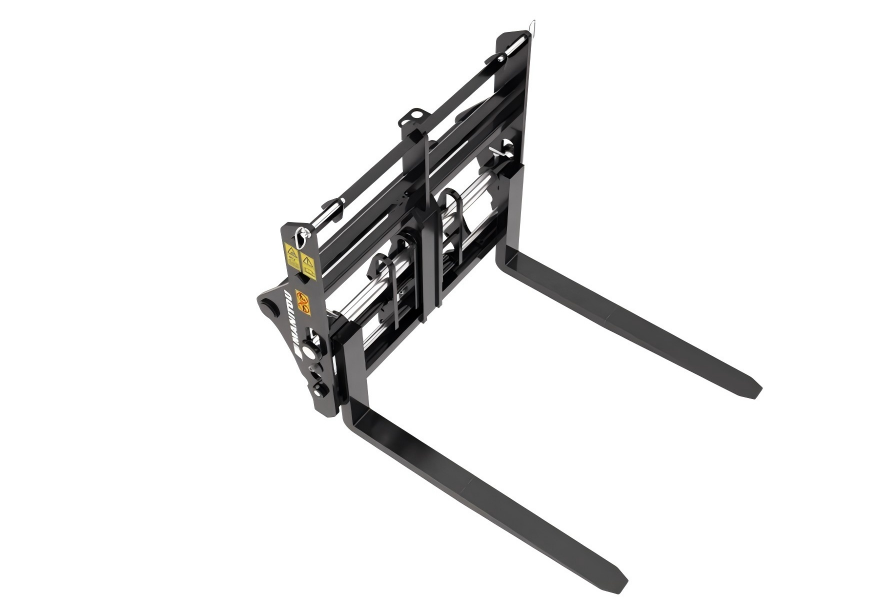
Description
Application Fields
1. Warehousing and Logistics
In warehouses, distribution centers, and freight hubs, hydraulic adjustable pallet forks are indispensable for handling palletized goods. They efficiently move items ranging from cartons of consumer products to heavy industrial components. The hydraulic fork spacing adjustment allows operators to adapt to standard pallets (e.g., 48”x40” US standard) as well as custom-sized pallets frequently used in niche industries. For instance, in an e-commerce fulfillment center, these forks can swiftly switch between handling small parcels on compact pallets and bulk merchandise on larger pallets, reducing downtime associated with attachment changes and boosting order processing speeds.
2. Manufacturing Industry
Within manufacturing facilities, these forks facilitate the transport of raw materials (such as metal sheets, plastic resin pallets) and finished products. The adjustable spacing ensures compatibility with diverse pallet sizes used for components in automotive, electronics, or machinery production. Consider a factory producing automotive parts: hydraulic pallet forks can move pallets of tiny fasteners and large engine blocks alike, with precise fork adjustment preventing load instability during transit. This versatility streamlines material flow on assembly lines, contributing to lean manufacturing practices.
3. Construction Sector
On construction sites, hydraulic adjustable pallet forks prove invaluable for moving building materials—bagged cement, pallets of bricks, lumber, and prefabricated components. Mounted on a skid steer loader, they navigate uneven terrain to deliver materials directly to work zones. The fork spacing can be adjusted to grip narrow pallets of tiles or wide stacks of drywall, ensuring secure transport. In a residential construction project, for example, these forks can efficiently move pallets of roofing shingles and then switch to handling pallets of windows, eliminating the need for multiple specialized tools.
4. Agriculture and Agribusiness
In farming and agricultural supply chains, the forks handle pallets of crops (fruits, vegetables), animal feed, and equipment parts. They adapt to the varied pallet sizes common in agribusiness—from small pallets for specialty crops like berries to large pallets for bulk grain bags. A dairy farm, for instance, might use them to move pallets of feed pellets and then adjust the forks to transport pallets of milk crates, all with the same attachment. This flexibility reduces equipment costs and simplifies logistics in rural, space-constrained environments.
5. Retail and Commercial Operations
Large retail stores, home improvement centers, and wholesale outlets rely on these forks to restock inventory. They can handle pallets of flooring tiles, stacks of lumber, or cases of consumer goods. The hydraulic adjustment allows staff to switch between pallets of different widths—say, from a pallet of 12”x12” tiles to a pallet of 4’x8’ plywood—without halting operations. In a big-box store, this capability ensures swift replenishment of shelves, enhancing customer experience and sales potential.
Product Features
1. Hydraulic Fork Spacing Adjustment
The defining feature is its hydraulic system, which enables operators to modify fork spacing from the machine’s cab. This eliminates manual adjustments, saving time and reducing physical strain. Whether widening forks to 60 inches for an oversized pallet or narrowing them to 12 inches for a compact load, the adjustment is smooth and precise, ensuring the forks align perfectly with pallet pockets. This precision minimizes load shifting and damage, a critical advantage when handling fragile or high-value items.
2. High-Strength Structural Design
Crafted from premium-grade, heat-treated steel, the forks and frame withstand heavy loads and rigorous use. Reinforced welds and thick steel plates ensure resistance to bending or warping, even when lifting maximum-capacity loads (ranging from 2,000 lbs to 10,000+ lbs depending on the model). In applications like moving concrete blocks or steel beams, this durability guarantees long-term reliability without structural failure.
3. Universal Quick-Attach Compatibility
Designed with industry-standard quick-attach interfaces, these forks integrate seamlessly with most skid steer loaders, forklifts, and telehandlers. Operators can attach or detach the forks in minutes, enabling “one-machine-multiple-tasks” efficiency. A construction crew, for example, can use the same skid steer to plow snow in winter and move pallets of building materials in summer, simply by swapping attachments.